
What counts as roof debris?
Roof debris includes leaves, pine needles, small branches, twigs, seed pods, mud, animal nesting material, and windblown litter. In colder climates, wet leaves and organic matter can remain on a roof through fall and become trapped under snow or ice.
Debris is more than a cosmetic concern. Piles of damp material can hold moisture against shingles, block drainage paths, encourage moss growth, and hide damaged flashing or roofing materials. Larger branches may puncture shingles or damage gutters.
For homes in Herkimer, roof debris is especially common after strong winds, heavy rain, late-season storms, and the transition from autumn into winter. Roofs near mature trees generally need more frequent observation than roofs in open areas.
Should debris be removed from the roof?
Yes, loose debris should generally be removed before it becomes wet, frozen, or packed beneath snow. Clearing the roof can help water move toward gutters and reduce the chance that small problems remain hidden.
Removal is most useful when debris is:
- Collecting in valleys where two roof slopes meet
- Blocking areas around chimneys, plumbing vents, or roof windows
- Resting behind raised flashing
- Covering shingles for extended periods
- Accumulating near gutters or downspouts
- Made up of branches large enough to bend or break roofing materials
A few scattered leaves are not usually an emergency. A thick, damp layer or a fallen limb deserves more immediate attention, particularly if water is entering the attic or upper floors.
Is it safe to remove roof debris yourself?
Roof work is only reasonably suitable for do-it-yourself removal when the roof is low-sloped, dry, stable, and easy to reach without climbing onto the roofing surface. Steep roofs, wet shingles, icy conditions, fragile materials, and roofs more than one story above the ground create substantial fall risks.
Do not climb onto a roof during or shortly after rain, frost, snow, or freezing temperatures. Shingles can look dry while remaining slick. Morning condensation can also make roof surfaces hazardous.
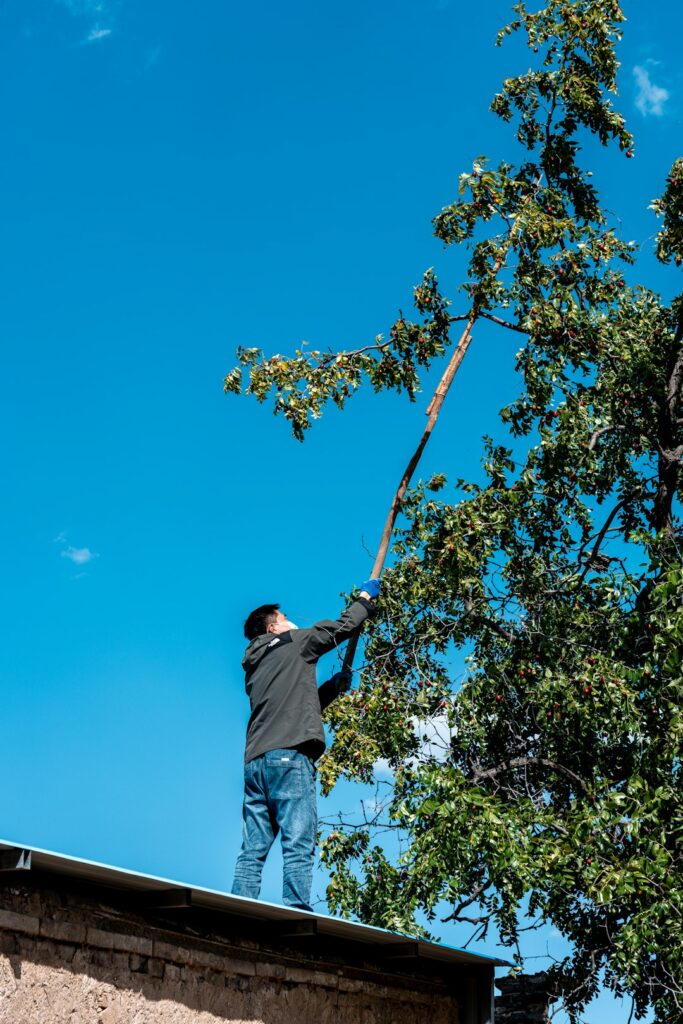
A safer approach is to remove light debris from the ground or from a securely positioned ladder using a roof rake or soft-bristled extension tool. The tool should be long enough to reach the edge without leaning dangerously or pulling forcefully against the roof.
If a person must climb onto the roof to reach the debris, fall protection and proper equipment become essential. Unstable ladders, improvised platforms, and working alone increase the danger.
What tools should be used?
The right tool depends on the roof material and the location of the debris. For ordinary leaves and small twigs, use equipment that lifts or brushes debris away rather than scraping it across the shingles.
Useful options may include:
- A roof rake designed for light debris
- A soft-bristled broom on an extension handle
- Work gloves and eye protection
- A stable ladder placed on firm, level ground
- A bucket or tarp for collecting debris at ground level
- A garden hose for limited rinsing from a safe position
Avoid metal rakes, shovels, sharp tools, and stiff brushes. These can remove protective granules from asphalt shingles, scratch metal roofing, loosen roofing components, or damage membrane surfaces.
Leaf blowers can be effective for dry, loose material, but strong airflow may lift shingles, scatter debris onto nearby property, or send material into gutters. A blower should only be used from a safe position with controlled airflow.
How should debris be removed from asphalt shingles?
Start at the ridge or upper portion only if the tool can be used safely from a secure location. Pull or brush debris downward toward the eaves rather than dragging it upward against the shingle edges.
Use light pressure. Asphalt shingles are covered with protective granules that help shield them from sunlight and weather. Scraping, walking heavily on the roof, or repeatedly dragging tools across the surface can remove those granules.
Do not pressure-wash asphalt shingles. High-pressure water can strip granules, force water beneath shingle edges, and damage flashing or sealant. It can also spread loosened roofing material into gutters and surrounding landscaping.
After clearing the visible debris, look for missing granules, lifted shingle edges, exposed fasteners, cracks, and dark areas that may indicate trapped moisture.
How are roof valleys and gutters handled?
Roof valleys deserve careful attention because they collect water and naturally concentrate leaves and twigs. Debris in a valley can slow drainage and hold moisture against shingles.
From a safe position, gently pull loose material toward the lower edge with a soft tool. Do not dig into packed debris with a shovel or metal object. If material is wedged beneath flashing or shingles, forcing it out can create a leak.
Gutters should be checked after roof debris is removed. Leaves that are pulled from the roof often land in the gutter, where they can block water flow. Clear loose material by hand while wearing gloves, or use a gutter-cleaning attachment that can be operated from the ground.

Downspouts should also be checked for blockages. A clogged downspout can cause water to back up beneath the roof edge or spill beside the foundation. A gentle flow of water can help identify a blockage, but forceful pressure should be avoided.
What should be done after a branch falls on the roof?
A branch that has landed on the roof should not be dragged across the shingles. Even a branch that appears light may have punctured the surface, cracked flashing, or damaged the roof deck underneath.
Look from the ground for:
- Broken or displaced shingles
- Sagging roof areas
- Damaged gutters or fascia
- Exposed underlayment or wood
- Water stains in the attic or upper rooms
- A branch touching electrical wiring
Stay away from any branch near electrical lines. If the roof is visibly sagging, the ceiling is bulging, or water is entering rapidly, keep people away from the affected area and treat the condition as hazardous. Roof access should be left to properly equipped personnel when structural damage, ice, steep slopes, or electrical hazards are present.
How often should a roof be checked?
A practical schedule is to inspect the roof from the ground several times each year and after major windstorms. In Herkimer, a check before winter can help identify debris, loose flashing, clogged drainage paths, and other issues before snow and ice make access more difficult.
Pay particular attention after:
- High winds
- Heavy thunderstorms
- Wet, heavy snowfall
- Ice storms
- Nearby tree damage
- Extended periods of falling leaves
An attic check can reveal problems that are not visible from outside. Look for damp insulation, water stains, daylight through the roof deck, musty odors, or wet wood. These signs may indicate that debris removal alone will not solve the underlying issue.
What should never be done?
Do not burn roof debris, use an open flame to remove ice, or apply harsh chemicals without confirming that they are compatible with the roofing material. Do not walk on snow-covered roofing, and do not assume a roof is safe because it has a low pitch.
Never place a ladder against gutters, loose trim, or downspouts. Set it on stable ground and keep the area below clear of falling branches and tools.
Removing light, loose material can be a simple maintenance task, but roof debris becomes a safety issue when it involves height, ice, structural damage, electrical lines, or heavy limbs. In those situations, avoiding roof access is the most responsible choice.
